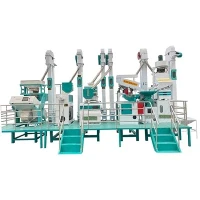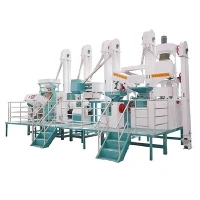



What is 25t/D Rice Mill Machine
25T/D modern rice milling machine is a standard automatic rice production line, which includes the main process of paddy cleaning, stone removal, rice separating, rice hulling, rice milling, etc.
Why Choose Us
Rich Experience
Providing technical support, troubleshooting, and maintenance services.
Quality Control
We have won a broad market by virtue of its strong technical force, strict quality control and high-quality service.
Our Service
Our service runs throughout the whole production process from the pre-sales, product design, production and after-sales.
One-stop Solution
Support to customers to ensure a smooth transaction.

MTP25T complete rice milling machine is our latest products, it is composed of lifting, cleaning, stone-removing, husker, gravity paddy separator, rice whitener, rice grader, polisher, color sorter etc. It integrates the collection of chaff and dust. On the basis of meeting the process needs, it can save space, save investment and reduce energy consumption. It is the preferred product of middle and former small family farms and rural cooperatives.

MTP30T complete rice milling machine is composed of lifting, cleaning, stone-removing, husking, husk separator, two-step rice mill, rice grader, polishing machine, color sorting machine etc. It integrates the collection of chaff and dust. On the basis of meeting the process needs, it can save space, save investment and reduce energy consumption.

This model complete rice milling equipment is our latest design products, it is mainly composed of lifter, cleaner, re-stoner, paddy husker, gravity paddy separator, rice whitener, rice grader, rice polisher, color sorting machine and etc. It is the preferred product of middle and former small family farms and rural cooperatives.
Features:
● Fully automatic rice production line, less power consumption
● Compact structure, nice performance, small volume
● Modern design and high-efficiency output
● Low noise and less consumption
● Easy to operate and maintain
● Output rice with high quality, low broken rate
● Reasonable price
Our 25t/D Rice Mill Machine production line offers various machine configurations, providing buyers with the flexibility to choose based on their specific needs. This diversity allows the production line to cater to rice production scenarios of different scales and processing requirements.
From destoning to the final packaging process, machines with different configurations are carefully designed to ensure both efficiency and customization of the production line. Buyers can select configurations that suit their production needs and goals, enabling intelligent, high-yield, and high-quality rice processing.
Type 1
This configuration includes a feeding hopper, rice destoner, paddy husker, gravity paddy separator, two rice mill, and white rice grading machine. Each machine has been upsized based on a 15-ton foundation.
The feeding hopper facilitates the initial stage by receiving raw material, followed by the destoner that efficiently removes impurities. The paddy husker, designed for optimal dehusking, is complemented by the white rice grading machine for precise separation. The rice mill then refines the grains, and the grading machine ensures a uniform and high-quality end product. This configuration, with its enlarged dimensions, signifies an advanced and robust solution for rice milling on a larger scale.
Type 2
Building upon the configuration mentioned above, this setup incorporates a rice polisher, a rice polisher with water, a color sorter, and a packaging machine. The polisher and rice polisher with water enhance the appearance and texture of brown rice by using water mist and friction to create a smoother surface. The color sorter employs advanced optical technology to precisely detect and separate discolored or defective grains, ensuring the final product meets color and quality standards. Finally, the packaging machine is employed to precisely package the processed rice, ensuring hygiene and preservation.
This comprehensive upgrade not only retains the advantages of the base configuration but also introduces advanced polishing, sorting, and packaging technologies, making the entire production line more comprehensive and suitable for higher standards of rice processing requirements.
Type 3
Building upon the configuration as mentioned earlier, this setup replaces the water polisher with an additional rice milling machine. It retains the basic components of the feeding hopper, rice destoner, paddy husker, gravity paddy separator, rice mill, and white rice grading machine, opting for a more extensive application of rice milling machines by replacing the water polisher.
This change is likely aimed at further refining the grain processing and increasing overall production. The rice milling machine plays a more crucial role in this configuration, optimizing the milling process to ensure the final product achieves the highest quality and texture. Overall, this configuration emphasizes the milling stage of processing, providing users with greater flexibility to meet diverse rice processing requirements.
Type 4
This configuration, in addition to featuring a rice destoner, paddy rice husker, gravity paddy separator, white rice grader, and packaging machine, increases the number of rice milling machines to two.
Furthermore, an additional polishing machine has been introduced. This upgraded setup enhances the processing capacity at the milling stage and introduces a polishing machine to enhance the appearance and texture of the final product.
Type 5
This configuration is almost identical to the previous ones, with the only difference being the arrangement of components. In this setup, the color sorter is positioned after the second rice milling machine. Simultaneously, the water mist polisher is placed after the white rice grader, and a grain storage bin is added before the packaging machine.
This rearranged configuration still includes a rice destoner, paddy rice husker, gravity paddy separator, two rice milling machines, grain storage bin, and packaging machine. Despite the rearrangement of component placement, this configuration continues to provide users with an efficient and flexible solution for rice processing.
Components of Rice Milling Machines
Rice milling machines have several components that form a complete unit. To operate them effectively, familiarize yourself with the various features outlined below.
Read Also: Five Ways To Increase Farming Yields
Hopper
The hopper is the first component in a rice milling machine. It serves as the container for rice before the milling process begins. The hopper is designed for easy and comfortable loading of rice.
The hopper's capacity may vary depending on the size and type of rice milling machine, allowing anyone to load an appropriate quantity according to processing needs.
Cylinder
The cylinder is the primary component in a rice milling machine, playing a crucial role in removing the outer husk of the rice. The cylinder has a serrated surface that rotates and mechanically peels the rice's outer husk.
This rotating motion causes friction between the rice husk and the cylinder, resulting in husk removal and the separation of rice grains.
Speed Controller
Many rice milling machines have a speed controller that allows to regulate how fast the cylinder rotates.
This setting is important because different types of rice may require different speeds in the milling process. can adjust the cylinder speed to suit the characteristics of the rice being processed.
Grain Separator
The grain separator includes components that are responsible for separating rice from peeled rice husks.
After going through the cylinder peeling process, the rice grains that are separated from the skin will pass through a filter, while the peeled rice husks will be discarded. This grain separator ensures that only soft and fine rice will be dispensed by the machine.
Power Unit
The power unit serves as the rice milling machine's primary energy source. It provides the rotation needed for the cylinder and drives other components to perform husking and milling processes.
A rice milling machine with a robust and efficient power unit can yield better milling results. can use versatile machines from Honda Power Products as a power source for rice milling machines to achieve optimal results.
Frame and Casing
Frame and casing refer to components that provide structure and protection to the rice grinding machine. These two components work together to keep the user safe and maintain the integrity of the machine.
The frame is useful for providing strength and stability to the machine. Then the casing will protect the internal components from damage and potential physical danger during operation.
Here is an explanation of how farmers typically operate rice milling machines. Make sure understands each step thoroughly.
Rice Preparation
Before using a rice milling machine, ensure that the rice to be milled is prepared, The rice should be adequately dried before being fed into the machine.
High moisture content can affect milling results and reduce machine efficiency. Once the rice is dry, it can be loaded into the hopper.
Husk Removal
In this step, rice from the hopper is fed into the machine's cylinder. The rotating cylinder with serrated edges mechanically removes the outer husk of the rice.
The cylinder's rotation causes the husk to peel away, leaving the rice grains intact. This process ensures that the rice remains undamaged.
Rice and Husk Separation
After husking, the rice grains separated from the husk pass through a grain separator. This component further separates the rice from the husk that has been peeled away.
Rice that passes through the grain separator is discharged from the machine, while the discarded husk is removed. This separation ensures that only high-quality rice is produced by the engine.
Speed Adjustment
Some rice milling machines have a speed controller, allowing to control how fast the cylinder rotates.
Speed adjustment is crucial because different types of rice may require different milling speeds. can produce rice that meets the desired quality standards by setting the right pace.
Rice Collection
Rice that has been separated from the husk exits the machine and can be collected for further processing. Ensure have suitable containers for collecting rice to keep the milling process running smoothly.
Maintenance and Cleaning
After the milling process, ensure cleans any remaining rice residue and dust from the machine. Follow the machine's user manual for proper maintenance and care. Regular inspections and maintenance will help maintain machine performance and ensure optimal milling results for future use.
So, that's how rice milling machines work, and needs to understand the process thoroughly. Each step is vital in producing high-quality rice, from rice preparation to husk removal and separation.
With the gradual improvement of living standards, people have put forward higher requirements for the quality of rice, and the rice milling process has been improved rapidly.
With the continuous improvement of rice varieties, the traditional rice mills have high broken rice rate due to backward technology. The arrangement of the traditional rice milling machine is unreasonable and the process is backward, resulting in insufficient air volume and low wind pressure through the rice milling chamber. The grain settles at the bottom of the rice milling chamber under the action of its own weight, and the fluidity is poor. The rice sports area is not fully utilized. In order to improve the processing quality of rice, it is necessary to use one machine or two machines to increase the pressure inside the rice milling chamber, but it will cause the rice temperature to rise, and a large amount of broken rice will be produced during the rice milling process. Therefore, in order to reduce the broken rice rate and improve the quality of rice, it is necessary to adopt adopt a new type of rice milling machine.
The new rice mill greatly reduces the broken rice rate, saves energy by increasing the utilization rate of the rice production area per unit of output and the air volume penetrating the rice milling chamber ,and can be used in series or in parallel with other machines. The finished rice processed by the model has uniform precision, fine and smooth surface, good color and less starch in the milled rice.
What Is Rice Polishing?
Rice polishing is an indispensable process for producing high-quality refined rice in rice mill plant. The polishing treatment can not only remove the floating bran on the surface of the rice grains, but also play the role of pre-gelatinization and gelatinization of the starch on the surface of the rice grains.
Rice polisher for sale in rice mill production line
The degree of starch pregelatinization and gelatinization on the surface of rice grains depends entirely on the effect of water and heat or the addition of edible throwing aids during the rice polishing process. Polishers that can produce hydrothermal effects can achieve good polishing results. It is a very important equipment in rice mill plants.
The Principle of Rice Polishing Machine
Treating the surface of the rice grains can make the rice grains crystal clear and transparent, and form a very thin gel film on the surface of the rice grains. This process is called rice polishing. The main function of the rice polishing machine is to remove the bran powder adhering to the surface of the white rice. After the surface of the rice is polished, there is a protective layer of wax, which can not only prevent the rice bran from sticking or falling off in the production, storage, transportation, and sales links, ensure the cleanness of the rice, but also improve the quality and commodity value of the finished rice , Is conducive to the storage of rice, maintains the freshness of rice, and improves the edible quality of rice.
Working Process of Rice Polishing Machine
The white rice milled by the rice mill to the standard one-meter accuracy flows down from the feed port into the polishing room, and at the same time, the heated water (used when the room temperature is lower than 15°C) is passed through the flow meter through the rubber tube through the temperature-controlled water tank. The air-water mixing nozzle forms water mist through high-pressure air and enters the hollow main shaft impingement area.
Rice polisher stucture
Under the action of strong negative pressure suction, the water mist passes through the main shaft and the vent holes of the polishing roller and enters the surface of the polishing roller to mix with rice and adhere to it. On the surface of the rice grain, the surface of the rice grain is moistened and softened. Through the rotating movement of the polishing roller in the polishing chamber, the rice grains are continuously moved in the polishing chamber.
During the movement, relative movement, relative friction and squeezing occur between the rice grains, between the rice grains and the polishing roller, and between the rice grains and the rice sieve. Because the surface of the rice grains is wet and soft, this friction will remove the bran powder and acne on the surface of the rice grains on the one hand. On the other hand, the starch layer on the surface of white rice undergoes gelatinization and crystallization during the friction extrusion process to form a bright protective film, which improves the surface finish and prolongs the storage time of the later rice. The fine rice bran and fine chips produced during the polishing process are removed from the machine through the rice sieve under the action of negative pressure and strong suction.
Characteristics of Rice Polishing Machine
● The surface of the rice polished by the automatic water adding constant temperature device and the multi-position spray device is smooth and translucent. Greatly increase the commodity value of rice. To
● Novel design, beautiful appearance, convenient operation, stable and reliable mechanical performance. To
● According to the shape, length, moisture and quality of rice, stabilize different polishing schemes and improve the professional performance of the polishing machine. To
● Improve the commercial value of rice and extend the shelf life of rice. To
● The built-in single-roller polishing machine has the characteristics of small footprint and convenient installation and operation.
Main Structural Features and Functions of Rice Polishing Machine:
The main structures of various types of rice polishing machines are similar. They are mainly composed of a spraying part, a polishing part, a water supply system and a blower mechanism. The feeding device and the discharging device are also
The complete set rice mill machine is a kind of agricultural machinery and necessary for agricultural production. We can use the complete set rice mill machine to effectively separate the mixed stones ,impurities such as leaves in the grain, and can process high quality rice. The power of the complete rice mill machine is relatively large. In the course of use, if the operation is improper, the power consumption of the equipment may increase. In the long run, the processing cost will be greatly increased, which will result in a lot of unnecessary consumption. Therefore,we need to find ways to control the energy consumption of the complete set rice mill machine.
There are many manufacturers of rice mill machine on the market, but many of them have no production qualifications. The use of unqualified rice mill machine not only consumes a large amount of electricity, is not conducive to production, but also has low productivity, many broken rice, and even easily causes production accidents. Therefore, choosing a reliable rice mill machine manufacturer is the most important.
Next,power measurement is a common method used to save electricity during rice milling. Strictly implement maintenance and repair plans for rice mill complete sets of equipment, reduce downtime, reduce maintenance costs, and increase production efficiency. Only by strictly observing the safety production system can the accidents be reduced to a large extent and the equipment utilization rate can be improved. During the use of rice mill complete sets of equipment, "peak production" can be used. By dividing energy use into different periods, the energy-intensive production process can be placed at a lower electricity rate.
Our Factory
Our factory covers an area of 43000 square meters, and has more than 100 employees, of which technical personnel account for 10%. Our factory is located in Benniu Town, Xinbei District, Changzhou City, close to the Shanghai-Nanjing Railway, Shanghai-Nanjing Expressway, only 5 kilometers away from Changzhou Airport, the geographical location is very superior.


FAQ
Q: What are the two main types of rice mill?
Q: What are the effects of rice mill?
Q: What happens when you mill rice?
Q: Is milled rice better?
Q: Why do they mill rice?
Q: Can you mill rice at home?
Q: What is the yield of rice milling?
Q: What is the recovery rate for rice milling?
Q: What is the brief description of rice mill?
Q: How do you use a rice milling machine?
Pre-cleaning the paddy prior to milling.
Removing the husk or outer layer from the paddy.
Rice milling section.
Polishing or whiting the brown rice to remove the bran layer.
Separating the broken grains from the whole kernels.
Color Sorting.
Bagging the milled rice.
Q: What is modern rice milling process?
Q: What is the traditional method of rice mill?
Q: What are the raw materials for rice mill?
The basic raw material for the unit is paddy which is locally available. The total requirement of paddy for an output of 600 tonnes will be 750 tonnes at recovery rate of 80%.
Q: What are the different of conventional milling and modern milling?
Q: What is the husk of rice mill?
Q: What are the 2 parts of rice that are removed during milling?
Q: Which nutrient is lost during rice milling?
Q: How much power does a rice milling machine use?
Q: What is the use of compressor in rice mill?
Q: How do you calculate rice mill capacity?
Hot Tags: 25t/d rice mill machine, China 25t/d rice mill machine manufacturers, suppliers, factory, 25 ton per day rice mill plant, mini auto rice mill, 30 ton per day rice milling machine, rice milling machine for home, rice husk packing machine, Rice Milling Line