


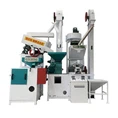


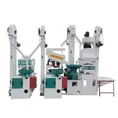
Complete Rice Mill
What is Complete Rice Mill
Complete Rice Mill is a complete set of rice milling plant designed to produce high quality refined rice, includes cleaning, hulling, whitening, polishing, sorting, grading and packing, all the operation is completely automatical controlled.
Why Choose Us
Rich Experience
Providing technical support, troubleshooting, and maintenance services.
Quality Control
We have won a broad market by virtue of its strong technical force, strict quality control and high-quality service.
Our Service
Our service runs throughout the whole production process from the pre-sales, product design, production and after-sales.
One-stop Solution
Support to customers to ensure a smooth transaction.


Rice is one of the most important staple foods in the world, especially in Asia and Africa. It is consumed by billions of people every day and provides essential nutrients and energy. However, rice production is not a simple process. It involves several steps, such as harvesting, drying, cleaning, hulling, polishing, grading and packaging. To ensure the quality and efficiency of rice processing, many farmers and millers use a complete rice milling machine.
A complete rice milling machine is a comprehensive equipment that integrates all the functions of rice processing. It can perform pre-cleaning, storage, drying, hulling, whitening, polishing, optical sorting and bagging of raw paddy. It can also produce different types of rice products, such as white rice, brown rice, parboiled rice and broken rice.
There are many advantages of using a Complete Rice Mill machine for rice processing.
Some of them are:
It can save time and labor. A complete machine can process large quantities of paddy in a short time with minimal human intervention. It can also reduce the risk of accidents and injuries for workers.
It can improve the quality and yield of rice. A complete machine can remove impurities, husks and bran from paddy effectively and uniformly. It can also adjust the degree of whiteness and polish according to customer preferences. It can produce high-quality rice with low breakage rate and high milling recovery rate.
It can reduce the cost and waste of rice processing. A complete machine can optimize the use of energy and water resources. It can also recycle the by-products of rice processing, such as husks, bran and broken grains. These by-products can be used for animal feed, fertilizer or biofuel production.
It can enhance the competitiveness and profitability of rice business. A complete rice milling machine can meet the diverse demands of different markets and customers. It can also comply with the standards and regulations of food safety and hygiene. It can help farmers and millers increase their income and reputation.
A complete rice milling machine is a smart investment for anyone who wants to start or expand their rice business. It can provide reliable performance, high efficiency and quality results. There are many manufacturers and suppliers of complete rice milling machines in the market. They offer various models and specifications of complete rice milling machines to suit different needs and budgets.
Rice, is the most important staple food of people in daily life, it is the main rice by rice mill made after machining and processing of various processes of the finished product. It is mainly made through rice mill plant and after complex rice processing process finally we get the finisher product-rice. Rice mill plant can not only remove the husk of paddy, and at the same time it also can improve the quality of rice products, improve the nutritional value of rice itself. So, in the rice milling machine what effects does rice mill plant have?
● At present, with the continuous improvement of people's living quality, rice milling machine enterprises become scale development, collectivize development. People began to pay attention to the comprehensive utilization of rice resources and product quality brand benefit, only in this way can promote the better development of industry and product structure adjustment.
● Large-scale rice milling machine industry in the process of adjustment should also devote a great deal of money to buy a better rice mill machinery equipment, ensuring that in the processing of rice at the same time also can improve the quality of white rice yield and high quality of rice, which can be more welcomed by people.
Rice milling machine plays a important role in rice processing industry.
Rice milling Machine Supplier Should Make Great Effort to Develop rice milling Machine Industry
Rice is our human main meal in our daily life, especially in foreign countries. However, in recent years, rice milling machine industry faces depression affected by global economic crisis. rice milling machine in China and foreign countries strikes the market, bringing big economic pressure to rice milling machine suppliers.
Faced with depressive market, rice milling machine supplier should improve scientific technology to realize rice milling machine industry development. rice milling machine should reduce energy consumptions at maximum by bring in advanced machinery, enhancing operation efficiency and decreasing management and financial costs.
Only by mutual hard work of the rice milling machine supplier and the government, can the rice milling machine industry get better development in market depression.
Complete Rice Mill Functions
Rice is the most Favorite and most widely used food world over and this blog covers the modern rice milling process as we very well know, Rice is a natural product and is produced by farming on land. Farming produces rice in the form of PADDY.
Paddy Dehusking
This paddy consists of rice covered by the protection layer known as Husk. After cutting paddy from the field, it is cleaned to remove dust sticking on it. And then this paddy is taken to rice mill for final processing.
Many years back two iron rolls rotating at different speeds were used to remove the husk. These were called as hullers. In these two iron rolls, paddy is infused and by the friction of two rolls rice is separated from the husk.
But a big disadvantage of this system was that due to the hardness of rolls, a very high percentage of rice was broken during the process and in today's modern world price difference between full rice and broken rice is very high.
To overcome this difficulty, our scientists did innovation and hence came into picture Rice Rubber Roller.
These rice rubber rolls rotate at different speeds and the paddy is infused between the two rolls and thereby resultant friction leads to removal of husk from rice.
This process leads to lots of saving by saving broken percentage of rice. Since the husk is light in weight, therefore, this is collected.separately by using suction blower system which collects husk in a separate bin and this also allows the decreased temperature of Rice mill Rubber Roller.
After this rice is taken to grader to separate the broken rice from full-length rice. Next step is the complete cleansing of rice and removal of dust by the blower system.
Whitening of Rice
Then the next step is the whitening of rice. since rice obtained by the above method has a layer of bran attached to it which is light brownish in color. and people love to buy and eat more and more white and bright color, their bran layer has to be removed to give the rice a very whitish color.
For this rice is taken to the machine called WHITENER STONE where rice is put in a machine where an emery stone is rotating at high speed. This emery stone is generally made of silicon carbide.
The friction between rice and silicon carbide rolls polishes rice and removes the bran layer attached to it. Before putting rice in the whitening machine, a strong magnet is attached to the machine, which removes any sort of iron ( if any) in rice and hence protects the stone to be damaged by iron.
Also before putting rice in the whitening machine, it is passed through a machine. This is also very necessary since rice is a natural product and if any type of hard mud as stone goes to the whitening machine, it will certainly damage the emery rolls since they are made by glass technology and are easily breakable by any type of rough use.
Do you Know the Maintenance Skills of Complete Sets of Rice Milling Machines?
The complete set of rice milling machine has been used for a long time. If you want to extend its service life, then we need to master some maintenance methods. If you don't know it very well, then don't worry, because our manufacturer summarizes the relevant The maintenance method of the complete set of rice machine equipment, I hope you can read it carefully. At the same time, it is recommended that you save this article in case of emergency, and look forward to your reading.
Maintenance method of complete set of rice milling machine:
● Mechanical equipment such as complete sets of rice milling machines usually require annual overhauls, dismantling and maintenance of motors, cleaning and refueling or replacement of bearings, insulation monitoring, and improvement of cooling systems, etc., to ensure that the motors are running in good condition. The rice outlet can be installed with various utensils, easy to clean and less dust, making the machine more convenient and practical. The intelligent rice milling equipment is small enough, the noise is low enough, and the rice bran treatment is perfect. The processing effect is high enough, so that the waiting time for customers is relatively short. Freshly milled rice has the characteristics of good taste, fresher and more nutritious. The biggest feature of intelligent rice milling equipment is instant processing. This fresh and nutritious freshly milled rice retains most of the nutrients of brown rice, and the freshly milled rice is preserved. Most of the germ and endosperm in rice.
● All kinds of nutrients are retained, especially B vitamins, inorganic salts and dietary fiber are much richer than polished white rice. Although dietary fiber cannot be absorbed and utilized by the human body as a nutrient, its effect on human health is prepared. It is concerned that cellulose can increase gastrointestinal motility, which is beneficial to clean up wastes in the human body and relieve the pain of constipation. In addition to the medium-sized intelligent rice milling equipment in supermarkets, there is also a small household rice milling machine. The use of complete sets of rice milling machines is very high, and the cost-effectiveness of its use is also very high, all of which belong to the type of intelligent equipment.
● During the use of the complete set of rice milling machine, it is necessary to regularly check whether the fixing nut of the movable toothed plate is loose and all the fastening parts must not be loosened, especially the screws in the fixed toothed plate of the processing equipment. Appropriately inject lubricating oil before starting work, and increase the number of refueling for continuous work.
● Maintenance of the complete set of rice milling machine. After cleaning the main shaft bearing cavity, be sure to replace the new lubricating oil. There are strong requirements for safety and hygiene in the design and manufacturing process of complete sets of rice milling machines. During the design, it is determined to meet the requirements of mechanical structure in terms of structure and materials. Economical, we need to take reasonable measures.
Why and How to Maintain a Modern Rice Mill Plant


With the advancement of technology, state-of-the-art machinery has come into the rice milling sector. So to keep them active, there are various rules and regulations for maintenance. In the absence of which the latest machinery can easily become ineffective. There are various types of rice mill machines to complete rice milling process. A rice mill is a food-processing arrangement & facility where raw paddy is processed to rice. The final rice is procured from paddy fields, milled and processed in modern machinery. Most important part of whole rice milling process is rice mill machine. It is a grain processing equipment. Regular maintenance of Rice mill machinery is needed to prolong service life of rice mill machines. Now let's talk briefly about the maintenance of the rice mill. One thing to keep in mind is that the milling business equipment plays a major role, they should always be kept alive. Rice Mill Plant Maintenance Rules can be divided into several categories. E.g.
Maintenance of Rice Mill Machine To understand whole process of rice mill maintenance job, we divided maintenance in to sub tasks.
Regular Moisture Testing Cleaning Whitening Room Rice Mill Machinery Parts & supportive parts Checking Regular Maintenance tasks
Regular Moisture Testing In Rice Mills moisture control is primary task related to maintenance. Increase in moisture content of rice can increase broken rice quantity. Rice milling machine must maintain a certain degree of dryness. Moisture content should not exceed 14% & 15%. Result of Ignorance
Increase in broken Rice grain Affected rice quality Increases Power Consumption
Cleaning Whitening Room Rice Mill maintenance staff should pay attention to check scattered pieces of remains such as nails, stones and other impurities in the rice. Result of Ignorance
Causes blockage in Whitening Room Damage the rice screen
Rice Mill Machinery Parts & supportive parts Checking Check the rice mill machine parts such as rice sieve, rice knife and cylinder core on regular basis also before starting the machine.
Rice is a common food source in various cuisines and cultures.
Rice is a staple food for a significant portion of the world population.
In India, where agriculture is a primary occupation, rice-based industries are in high demand.
Starting a rice mill business can be profitable.
"Rice is a primary food source in many places around the world, including India where agriculture plays a major role in the economy.”
Process of Rice Mill Plant
The rice milling process involves several steps to transform paddy rice into polished rice that is ready for consumption. Here is a step-by-step explanation of the process along with the names of some common instruments used:
Starting a rice mill plant business is a significant venture, and having a reliable boiler is crucial for the success of your operations. In the context of your industry, a boiler plays a pivotal role in the rice milling process, contributing to the overall efficiency and quality of the final product.
Steam Generation
Boilers are essential for generating steam, a key element in the rice milling process.
Steam is used for parboiling, drying, and polishing the rice, ensuring a high-quality end product.
Energy Source
Boilers serve as a primary source of energy for various machinery in the rice mill.
They provide the necessary heat for drying paddy, maintaining the ideal moisture content for milling.
Parboiling Process
Parboiling is a crucial step in rice milling to enhance the nutritional value and improve the milling quality.
Boilers facilitate the parboiling process by supplying steam to steam jackets or vessels.
Drying Operation
Boilers are indispensable for drying the harvested paddy before milling.
Efficient drying ensures uniform milling and prevents mold or bacterial growth.
Steam for Cleaning and Polishing
Steam generated by boilers is utilized for cleaning and polishing rice grains.
This step enhances the appearance and marketability of the final rice product.
Economic Viability
Investing in a high-quality boiler ensures a reliable and continuous energy supply, contributing to the economic viability of the rice mill.
Environmental Considerations
Modern boilers designed with eco-friendly features contribute to sustainable and environmentally responsible operations.
Choosing the Right Boiler for Your Rice Mill
● Capacity and Efficiency
Assess the processing capacity of your rice mill to determine the appropriate boiler size.
Opt for energy-efficient boilers to reduce operational costs.
● Fuel Type
Consider the availability and cost of different fuel options (such as biomass, coal, or gas) when selecting a boiler.
● Technology and Automation
Explore boilers with advanced control systems for improved efficiency and ease of operation.
Automation features contribute to better process control.
● Compliance and Safety
Ensure that the chosen boiler complies with safety regulations and industry standards.
Regular maintenance is essential to guarantee safe and reliable operation.
Our Factory
Our factory covers an area of 43000 square meters, and has more than 100 employees, of which technical personnel account for 10%. Our factory is located in Benniu Town, Xinbei District, Changzhou City, close to the Shanghai-Nanjing Railway, Shanghai-Nanjing Expressway, only 5 kilometers away from Changzhou Airport, the geographical location is very superior.


FAQ
Q: What is the purpose of a rice mill?
Q: How efficient is a rice mill?
Q: 3.What happens when you mill rice?
Q: Is milled rice better?
Q: Why do they mill rice?
Q: Can you mill rice at home?
Q: What is the yield of rice milling?
Q: What is the recovery rate for rice milling?
Q: What is the brief description of rice mill?
Q: How do you use a rice milling machine?
Pre-cleaning the paddy prior to milling.
Removing the husk or outer layer from the paddy.
Rice milling section.
Polishing or whiting the brown rice to remove the bran layer.
Separating the broken grains from the whole kernels.
Color Sorting.
Bagging the milled rice.
Q: What is modern rice milling process?
Q: What is the traditional method of rice mill?
Q: What are the raw materials for rice mill?
The basic raw material for the unit is paddy which is locally available. The total requirement of paddy for an output of 600 tonnes will be 750 tonnes at recovery rate of 80%.
Q: What are the different of conventional milling and modern milling?
Q: What is the husk of rice mill?
Q: What are the 2 parts of rice that are removed during milling?
Q: Which nutrient is lost during rice milling?
Q: How much power does a rice milling machine use?
Q: What is the use of compressor in rice mill?
Q: How do you calculate rice mill capacity?
As one of the leading complete rice mill manufacturers and suppliers in China, we warmly welcome you to buy discount complete rice mill made in China here from our factory. For price consultation, contact us.
100 tons per day rice milling line, rice husking and rice whitening machine, rice packing machine automatic