


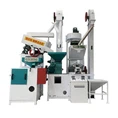


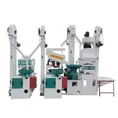

What is 40tpd Rice Milling Line
MTP40T complete set of rice milling production line is our specially developed products, improvement of rice, clean up, to stone, husking, big paddy separation, rice milling, rice bran separation, classification, polishing color choose, metering packaging, integrating the chaff, dust collection, according to the site in one word, L type, U type, reasonable structure layout is clever. Can be customized for customers.
Why Choose Us
Rich Experience
Providing technical support, troubleshooting, and maintenance services.
Quality Control
We have won a broad market by virtue of its strong technical force, strict quality control and high-quality service.
Our Service
Our service runs throughout the whole production process from the pre-sales, product design, production and after-sales.
One-stop Solution
Support to customers to ensure a smooth transaction.

This complete set of rice milling production line is our specially developed products which could produce high-quality finished rice. It also could be customized for customers' different requirements.

This rice mill production line is composed of rice cleaner, de-stoner, paddy huller, gravity separator, multi-units rice milling machines, white rice grader and other matching equipment. We could customized the whole line base on our customer's different capacity and different finished rice quality.

MTP38-60T complete rice mill production line is our specially developed products. It is composed of a number of reasonably designed equipment, compact structure, complete functions, from rice feeding to finished rice bagging which are completed by machinery.

MTP40T complete set of rice milling production line is our specially developed products, improvement of rice, clean up, to stone, husking, big paddy separation, rice milling, rice bran separation, classification, polishing color choose, metering packaging, integrating the chaff, dust collection, according to the site in one word, L type, U type, reasonable structure layout is clever. Can be customized for customers.

MTP60T rice milling line is a complete set product specially developed by our company. This automatic complete set rice milling line is developed by our company can produce high-quality rice, the ideal device. It includes several different kinds of models. Were able to grind different grade Standards rice.

MTP60T rice milling equipment is a complete set product specially developed by our company. It integrates rice lifting, cleaning, stone removal, bran separation, rough separation, milling, white rice grading, polishing color selection, measurement and packaging.

Complete rice milling line is for the deep rice processing and to achieve the high quality white rice. The output is from 2.5ton/hour to 15ton/hour or more.
Product Feature:
● Robust and compact in structure.
● Attractive appearance.
● Easy operation and maintenance.
● Small space.
● High yield rate.
● Widely popularly used by the customer all over the world.
The whole line could be customized according to customer's requirement. The machine configuration can be adjusted as needed.
Traditional rice milling production lines mostly use the one-machine whitening processing method. While, with the continuous development of technology, rice mills gradually used two-machine whitening instead of one-machine rice mill. For, it was discovered in actual production that two machines were used. Grinding white has several obvious advantages, which can be summed up as "four improvements and reductions."
One, Increased rice yield and reduced broken rice
After continuous experimentation, it has been found that the total broken rice and small broken rice obtained by this method of rice milling have been reduced to some extent. The specific reduction is about: small broken 0.1%-0.5% and total broken 1.1% reduced -6.4%.
Two, The product quality is improved, the rice temperature is lowered, and the bran powder is reduced
The precision of the rice grains milled by this method is relatively uniform, and the color is relatively smooth. In addition, the pressure will gradually ease and weaken after the two machines for whitening, so compared to the one machine for whitening, the rice temperature will drop by 5-10°C and the bran powder will also be reduced.
Three, The quality of rice bran is good, the oil yield is high, and the bran content is reduced
During the two-machine whitening process, most of the rice bran will be discharged in batches, which is more conducive to reducing the crushing rate and the bran content of the finished rice, and it also reduces the bran content in the rice bran.
Four, an Increase in output and a decrease in consumption
Since the two-machine whitening machine replaced the one-machine whitening machine, the output of the rice mill has increased significantly, but the consumption has decreased significantly, which has improved the economic benefits of the manufacturer.
Use More Sets Rice Polisher Machine is Better At Rice Mill Plant
To improve the precision of rice, the rice factory sometimes uses a two-pass polishing or three-pass polishing process. But the real purpose of the rice milling equipment for finishing rice is to allow us to eat healthy and safe rice, and the two polishing processes are unnecessary.
Rice Milling Line - Quality Problems in Milling
Quality problems in milling
There are numerous factors that determine the final quality of rice produced by the rice mill. These factors relate to what extent the rice is milled (i.e. low milling degree), the level of grain breakage, level of impurities, color, and presence of off-type kernels such as chalky or damaged kernels. Some of these problems can be solved at the rice mill, whereas others are related to the way rice is grown and handled after harvest.
Undermilled rice
Under-milled rice is under-polished rice, or rice with bran streaks left in it. The bran contains much of the desired nutritious elements. Under milling will also yield higher milling recoveries. However, under-milled rice does not store well because of the high oil content of the bran. In addition, rice consumers almost universally desire well-milled rice because of its better appearance. Related to milling degree is the occurrence of red-streaked kernels; rice with part of the bran layer still sticking to the surface.
Broken grains
Grain breakage is a result of fissuring, or the formation of cracks in the endosperm prior to milling. To a certain extent, fissuring in rice grain occurs naturally in the field due daily changes in temperature and relative humidity. More importantly, fissuring can be caused by improper management of grain at all post-harvest operations from harvesting through to milling. Improper drying techniques often lead to fissuring in grain, or rewetting of stored paddy, and \improper milling techniques. Finally, not all fissured grain will break during milling, and medium or long grain varieties are more prone to breakage than short grain varieties.
Discoloration
Although whiteness is a varietal characteristic, the natural color of white rice can be affected by post-harvest discoloration. A general discoloration of the entire rice kernel occurs if wet paddy is left undried for extended periods (i.e. days). The wet grain will heat up, causing the grains to turn yellow or tan.
Chalkiness
If part of the milled rice kernel is opaque rather than translucent, it is characterized as chalky. Chalkiness disappears upon cooking and has no effect on taste or aroma, however it downgrades milled rice. Chalky grains are more brittle than non chalky grains and can break more easily during milling. Cause of chalkiness is interruption during the final stages of grain filling.
Damaged kernels
Damaged rice kernels are those which are fully or partially darkened as a result of insect , mold, water, or heat damage. The presence of even a few damaged grain kernels can severely downgrade rice.
Impurities
Impurities in milled rice are a sign of improperly cleaned paddy (picture) prior to milling, or contamination of rice during milling.
There are three main types of small rice milling machines in China: separate rice milling machines, Combined rice mill and Spray rice mill.
The split rice mill is easy to operate and has a low price, but the model is aging, and the milled rice is poor, and it has gradually been eliminated. Including a feeding device, a rice milling device and a separating rice bran device, the outlet of the feeding device is connected to the inlet of the rice milling device, and the outlet of the rice milling device is connected to the inlet of the separating rice bran device, characterized in that the feeding device The feed port is connected to a moisturizing device for wetting the grain, which is a tubular structure comprising a steam inlet and a grain inlet, and a valve is provided at the steam inlet.
Combined rice mill is a kind of high efficiency rice processing comprehensive equipment, with a compact structure, beautiful shape, simple operation, high rate of rice, broken rice, low power consumption and other advantages, suitable for farms, collective and individual grain processing, processing of rice quality is good, but its structure is complex, the price is more expensive.
The spray type rice milling machine has a good cost performance, and can complete the shelling and whitening process at one time, and the processed finished rice is white and bright, and has become the mainstream product in the market in recent years. Compared with the spray-type and split-type rice milling machine, the series of rice milling machine has great improvement and improvement in structure and performance, advanced structure, beautiful appearance, self-aligning, convenient operation and maintenance (especially convenient for changing), with rice The advantages are high rate, good rice quality, large output, low noise, low power consumption and low rice temperature.

Rice milling process is an important post harvest operation. Present day most of the traditional rice milling like Engleberg huller are being replaced by automatic and semi automatic mill. This article mainly show you the difference of traditional rice milling and modern rice mills.
Traditional rice milling, which also known as Village milling, Village-type rice milling was found in rural communities and are used for service milling paddy of farmers for home consumption.
Hand pounding of paddy in a mortar with a pestle is the traditional milling process in remote villages. Pounding the paddy induces upward and downward forces on grain against grain that removes the husk and bran layers. The pounding also breaks up fissured grain. The final cleaning is by winnowing in a woven bamboo tray. The winnowing process to separate unmilled paddy grain is an art.
Then use the single stage rice mill, The single pass rice mill is an adaptation of the "Engleberg" coffee huller from the United States, modified for milling rice. In earlier days this type of rice mill was very popular in most rice-growing countries.
With this traditional rice milling, we also can get rice from paddy, while the disadvantage is that:
1) The rice yield is very low,
2) With a higher broken rice rate.
3) Need large labor consumption
But nowadays. In many Asian countries, the traditional rice mills can no longer be licensed to operate as service or commercial mills. If industrial rice milling processing, it shall be essential to use the modern rice mills.
Here is the modern rice mill flow chart description:
Paddy Cleaner, which is an all purpose separator designed for the efficient separation of large coarse material and small fine materials such as grit during the cereal cleaning process. Also including the destoner.
Paddy Husker & Paddy Separator: All varieties of rice such as long grain, medium grain and short grain can be sorted easily and accurately. It separates a mixture of paddy and brown rice into three distinct classes: paddy mixture of paddy and brown rice, and brown rice. To be sent to a husker, back to the paddy separator and to a rice whitener, respectively.
Then, match a rice polisher, which cleans the surface of rice, significantly enhancing the quality of finished products.
If very large rice milling factory, we will also need match the grater,color selector etc, which can ensure get different quality of rice finally.
Modern rice mill with automatic operation, large capacity,less labor consumption etc. Which is more and more popular for industrial use.
How to Improve The Output of Rice Milling Machine?
Rice milling is the process that helps in removal of hulls and bran's from paddy grains to produce polished rice. Rice feeds thousands of millions of people and milling is the process wherein the rice grain is transformed into an edible form- fit for human consumption.
The amount of recovery during milling is dependent on diverse factors like variety of paddy, the degree of milling required, the quality of equipment used, et al Commercial milling systems perform milling of the paddy in stages, and hence are called multi-stage or multi-pass rice mills. The commercial Rice Milling Strives to reduce mechanical stresses and heat buildup in the grain in order to minimize grain breakage and produce uniformly polished grain.
Enhancing Output Of Rice Mills
The main Rice Milling Processes comprise cleaning, husking, separating, whitening, polishing, grading, color sorting, packing & weighing. In order to get high output, we need to follow carefully the stringent procedures like:
A) Milling should be at the right moisture content,
B) Pre-cleaning paddy before husking,
C) Employing paddy separator,
D) Utilizing two-stage whitening, grading the milled rice process,
E) Monitoring maintenance and replacing spare parts regularly. Why should we mill the rice at right moisture content?
The paddy moisture content of 14% is ideal for milling. If the moisture content is too higher low, grain breakage will occur. This leads to low head rice rate.
F) Parts like screen, emery roller, rubber roller, plastic bucket, polisher roller, and screw impeller wear out very easily.
G) Operate your Rice Milling Machine with the assigned method, and more output will follow. The rice milling facility & equipment conforms to specific configurations, with the milling components varying in design and performance.
In modern automated rice mills, many adjustments (e.g. rubber roll clearance, separator bed inclination, feed rates) are automated and whitener-polishers provided with gauges.
Adjustment to optimum measurements of the pressure in whiteners and polishers is crucial in raising the output of milling. If the pressure is too low, only energy is converted into heat but no bran is removed and vice versa.
H) The whitening process applies pressure to the grain, which generates heat and causes cracking and breakage of some kernels.
In a rice mill, operation of every machine plays a crucial role to get maximum yield but sometime due to the pressure of production and order fulfilment, operators show negligence and thus hidden losses start occurring.
Let's see below what those wrong operating methods are.
Aking High capacity from Pre-cleaning section
It is very common negligence seen in the plant which causes fine dust to carry forward with raw material and enters in the destoning machine, resulting chocking of screens and performance of Destoner gets affected. The stones are very harmful to further processes like De-husking, in which the rubber rolls may get damaged, and the surface gets rough which causes extra broken at this stage as well as develop wrinkles in healthy grain and finally increase in broken at the subsequent process like whitening and polishing.
Removing uneven bran from whitening and polishing section
This is the 2nd common problem observed in a rice mill that the operator doesn't remove even bran in each pass resulting in uneven pressure on rice grain. If the grains are held in whitener for a longer period, then due to friction between grains and with grinding wheels and screens, excess heat will generate which causes rice grain to get softer and finally broken increases. It is also observed, it causes uneven wear out of parts which need be replaced and, also excess consumption of power, that will increase production cost.
Not following cleaning procedure
Cleaning during the operation plays a vital role for consistent performance but due to negligence, it is not followed. Let's take an example of the precleaning section, if the regular cleaning is not performed then the same issues will arise which are described in point number 1. In the 2nd example, if proper cleaning is not done in the whitening and polishing section, it will cause to chock the screens resulting the narrow passage for traveling of bran and less sanitization. It will further lead to an increase in the temperature in the milling chamber and as discussed in point number 2, rice grain will get softer, and breakage will get increase.
Not Changing wear parts on time
All wear parts have a standard life and using more than that causes several issues in machine performance. Let's understand by an example if grinding stones of whitener are worn out and it is still being used, then to remove the desired bran will take more time than new or medium worn-out stones, thus grain will have to be kept for a longer period in the milling chamber which is prone to more breakage, over-polishing, scratching of grains.
In conclusion, I would say, in these competitive days, for a Rice Miller, paddy procurement price is same and rice selling price is same, so to get the maximum margins, he has only scope in his production facility by saving losses and utilizing every equipment to its best.
Our Factory
Our factory covers an area of 43000 square meters, and has more than 100 employees, of which technical personnel account for 10%. Our factory is located in Benniu Town, Xinbei District, Changzhou City, close to the Shanghai-Nanjing Railway, Shanghai-Nanjing Expressway, only 5 kilometers away from Changzhou Airport, the geographical location is very superior.


FAQ
Q: What are the two main types of rice mill?
Q: What are the effects of rice mill?
Q: What happens when you mill rice?
Q: Is milled rice better?
Q: Why do they mill rice?
Q: Can you mill rice at home?
Q: What is the yield of rice milling?
Q: What is the recovery rate for rice milling?
Q: What is the brief description of rice mill?
Q: How do you use a rice milling machine?
Pre-cleaning the paddy prior to milling.
Removing the husk or outer layer from the paddy.
Rice milling section.
Polishing or whiting the brown rice to remove the bran layer.
Separating the broken grains from the whole kernels.
Color Sorting.
Bagging the milled rice.
Q: What is modern rice milling process?
Q: What is the traditional method of rice mill?
Q: What are the raw materials for rice mill?
The basic raw material for the unit is paddy which is locally available. The total requirement of paddy for an output of 600 tonnes will be 750 tonnes at recovery rate of 80%.
Q: What are the different of conventional milling and modern milling?
Q: What is the husk of rice mill?
Q: What are the 2 parts of rice that are removed during milling?
Q: Which nutrient is lost during rice milling?
Q: How much power does a rice milling machine use?
Q: What is the use of compressor in rice mill?
Q: How do you calculate rice mill capacity?
Hot Tags: 40tpd rice milling line, China 40tpd rice milling line manufacturers, suppliers, factory, double body paddy separator rice mill machine, complete set of rice milling equipment, Shaping Vacuum Packing Machine, complete rice mill production line, rice water polisher, grain gravity destoner machine


