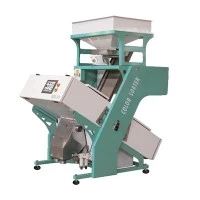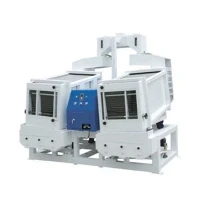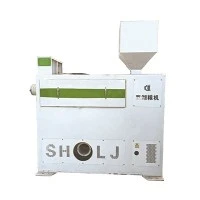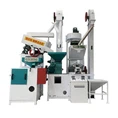


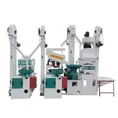

What is Specific Gravity Destoner
It is mainly used to remove stones mixed with particulate products such as rice, wheat, corn, and soybeans. Suitable for grain processing.
Why Choose Us
Rich Experience
Providing technical support, troubleshooting, and maintenance services.
Quality Control
We have won a broad market by virtue of its strong technical force, strict quality control and high-quality service.
Our Service
Our service runs throughout the whole production process from the pre-sales, product design, production and after-sales.
One-stop Solution
Support to customers to ensure a smooth transaction.

The material falls into the chute from the feeding mechanism, passes through the operating circular screen, and the coarse impurities screened out by the circular screen flow out from the dedicated discharge port.
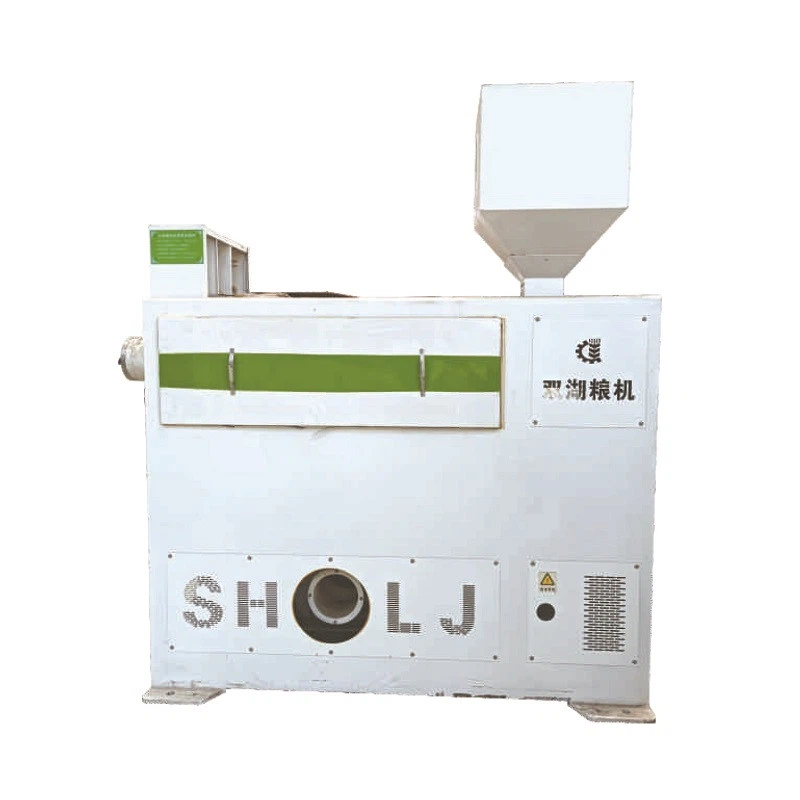
It is mainly used for precision processing of rice. Through this machine processing, the bran powder in rice can be effectively removed, making the finished rice clean and transparent, making it an ideal polishing equipment for rice mills.

It is mainly used to remove stones mixed with particulate products such as rice, wheat, corn, and soybeans. Suitable for grain processing.

It is mainly used to remove stones mixed with particulate products such as rice, wheat, corn, and soybeans. Suitable for grain processing.

The double body gravity paddy separator is a new type of separation equipment in rice milling process. This is beneficial for improving the yield of whole rice in rice milling and enhancing the economic benefits of enterprises. It is one of the key equipment in the rice milling process.

Gravity paddy separator (also known as gravity screen) is a device used in conjunction with rice milling equipment to separate rice husks and brown rice.

It is low-temperature rice mill. New Structure, good mechanical stability and easy disassembly. Higher pressure of suction for milling so as to make broken less, rice higher quality and bran fewer.

Rice Grader (Spring Support Rod Type)
It is a new type of white rice grading equipment that adopts a spring rod structure. It utilizes the difference in rice particle size and achieves the purpose of white rice grading through continuous screening of circular sieve plates with different diameters.

It utilizes the difference in grain types between broken rice and whole rice to perform overlapping rotations on a flat rotating sieve surface, and frictional propulsion to form automatic classification. This equipment is suitable for grading finished rice and also for separating similar granular materials.
Specific gravity destoners, also known as gravity separators, offer several advantages in the processing of bulk materials:
Efficient Separation: They effectively separate materials based on their specific gravity, which allows for the separation of dense particles from lighter ones. This process is highly efficient and results in cleaner end products.
Gentle Handling: Specific gravity destoners handle materials gently, minimizing the potential for breakage or deformation. This is crucial for preserving the integrity of delicate or valuable materials.
Energy Savings: Compared to other separation methods like magnetic or air separation, gravity separation typically requires less energy, making it a cost-effective solution.
Versatility: These devices can be used for a wide range of materials, from minerals and ores to seeds and grains, and can handle both dry and wet processes.
Minimal Maintenance: Specific gravity destoners generally have simple designs with few moving parts, resulting in lower maintenance requirements and reduced downtime.
Environmentally Friendly: Since they do not involve the use of chemicals or significant amounts of energy, specific gravity destoners are considered environmentally friendly separation methods.
Scalability: Gravity separators are available in various sizes, making them scalable to different production volumes, from small batch operations to large industrial plants.
Easy Operation: They are relatively easy to operate and control, allowing operators to adjust settings to optimize the separation process for different materials and desired outcomes.
Improved Product Quality: By removing unwanted materials, specific gravity destoners enhance the purity and quality of the final product, which is especially important in industries where product quality is paramount.
Specific gravity stone removal machine, also known as specific gravity classification stone removal machine, specific gravity selection machine, etc.; is a common equipment in rice processing plants. We all know that density and specific gravity are the physical properties of matter. Whether it is large or small, or the same size as grain, the same kind of stone and sand commonly found in nature have basically the same density and specific gravity. The working principle of the specific gravity stone remover is to separate the rice and the side stones according to the difference in the specific gravity and suspension speed of the rice and impurities, with the help of the upward airflow, so as to remove the stones and mud in the rice. The specific gravity stone removal machine is mainly used for grading and stone removal of wheat, rice, peanuts, corn, soybeans, etc., and can also be used for seed cleaning.
According to the different mechanical wind power, the specific gravity stone removal machine is divided into several categories such as suction type, blow type and circulating wind.
Grain and gravel are separated by means of vibrating motion, adjusting the airflow and adjusting the inclination of the screen surface. Grain is a granular body composed of particles with different particle sizes and specific gravity. When subjected to vibration or moving in a certain state, various particles will be divided into different levels according to their specific gravity, particle size, shape and surface state.
When the specific gravity destoner works, the material continuously enters the middle of the destoner screen from the feed hopper. Due to the vibration of the screen surface and the action of the airflow passing through the material layer, the porosity between the particles increases, and the material is in a fluidized state, which promotes automatic grading, the gravel with a large specific gravity sinks into the bottom layer and contacts the screen surface, and the grain with a small specific gravity floats to the top layer, and is driven by gravity, inertial force and continuous feeding, and slides to the net grain outlet; while the large specific gravity stone under the action of the inertial force of the screen surface vibration system and the air flow, the screen surface slides relative to the destoner, and moves to the selection area through the agglomeration area. In the selection room of the selection area, an air flow is introduced by the fan to blow back towards the front of the screen along the arc channel, and a small amount of grains contained in the stones are blown back to the aggregate area to avoid being discharged together with the stones.
The Functions of Specific Gravity Destoner in Oil Seeds Cleaning Process
Gravity stoner is one of cleaning equipment, which can remove the stones in the oilseeds. It is a stone separator by specific gravity, also called de-stoner.
The gravity stoner can remove more than 95% of stones in the oilseeds, and it has the advantage of simple structure and low consumption.
The structure of gravity stoner
Gravity Stoner is composed of a feed hopper, a suction pipe, a sieve body, a sieve plate, a discharge port, a stone mouth bar, vibration motor, rack, artificial leather drum etc.
Features of gravity stoner
● Good classification effect;
● Smooth operation;
●Low power consumption;
● Can be used to process various kinds of oil seeds.
Operation and maintenance of gravity stoner
● Drive with or without foreign body, drive wheel same sound check before the screen surface and inside the gravity stoner to drive it;
● Suction fan should be open, open throttle and start to remove stone and begin feeding;
● Keep the feed flow evenly, does not exceed 10% of the rated capacity. Note feed hopper feed store doors are not blocked and cleared up;
● Ensure to stone plate, uniform airflow unobstructed wind deflector;
● Pay attention to the bearing fever cases, regular cleaning, oil changes; timely replacement of worn found.
A wheat/maize gravity destoner, also known as a gravity separator or a specific type of destoner, is a machine used to remove heavy impurities, such as stones, from grains and seeds. It operates on the principle of density difference, utilizing gravity and airflow to separate materials based on their specific weight. Here's all you need to know about gravity destoners:
Operating Principle
The gravity destoner relies on the difference in specific weight between the grains or seeds and the heavier impurities. The material to be processed is fed onto a vibrating deck or table, where an upward airflow is applied. As the deck vibrates, the lighter grains or seeds rise to the top due to the airflow, while the heavier impurities, such as stones, settle to the bottom. The separated stones are discharged from the machine, while the clean product moves along the deck for further processing.
Adjustable Parameters
Gravity destoners offer adjustable parameters to optimize the separation process for different crops and impurity levels. These parameters typically include deck inclination, airflow speed, and vibration intensity. By adjusting these parameters, operators can fine-tune the separation process to achieve optimal results.
Applications
Gravity destoners are commonly used in the agricultural industry for various crops, including grains, seeds, beans, lentils, and more. They are particularly useful in the processing of cereals like wheat, rice, corn, barley, and oats. Gravity destoners efficiently remove heavy impurities, such as stones, clods, dirt, and metallic particles, ensuring the quality and purity of the final product. They are widely employed in grain processing plants, seed cleaning facilities, flour mills, and other processing operations.
Considerations
While gravity destoners offer effective heavy impurity removal, it's important to note that they may not be suitable for removing lighter impurities or contaminants such as dust, chaff, or husk. For comprehensive cleaning processes, additional equipment such as sieves, air aspirators, or magnetic separators may be required.
In summary, gravity destoners are valuable machines in the agricultural industry, providing efficient removal of heavy impurities from grains and seeds. Their reliance on density difference, gravity, and airflow enables effective separation and enhances the quality of the final product. With adjustable parameters and versatility in handling various crops, gravity destoners are reliable and customizable machines that contribute to efficient and high-quality grain processing operations.
Main Working Steps of Grain Cleaning and Destoner Machine Equipment



Destoner machine is an indispensable impurity removal equipment in grain processing. It is mainly used to remove side stones mixed in grain seeds, so as to reduce the sand content in grain and ensure the quality of processed grain. If you know the working principle and operation of the destoner machine and don't know why, it is undoubtedly not conducive to improving the process effect of the destoner machine.
Main working steps of grain cleaning and destoner machine
After the materials enter the destoner machine and grain screening, due to the different suspension speeds of shoulder stone and grain, under the combined action of appropriate vibration and updraft, the grain particles with lower suspension speed float on the upper layer, and the shoulder stone with higher suspension speed sinks into the bottom layer and clings to the screened grain, forming an automatic classification phenomenon, At the same time, due to the action of air flow, the gap between materials increases, and the positive pressure and friction between material layers decrease, so as to achieve the purpose of destoner machine.
However, during real-time operation, it is still necessary to control the air velocity in the destoner machine. When the destoner machine works normally, the updraft velocity penetrating the material layer is required to be equivalent to the suspension velocity of grain. If the air velocity is too high, the materials on the trend screen surface are easy to be blown through, and the air distribution is uneven, which destroys the automatic classification of materials and reduces the separation efficiency. If the air velocity is too small, the grain cannot be suspended, and it is easy to climb up with the stone, resulting in grain in the stone. At the same time, the automatic grading of materials is poor, and grain seeds are easy to contain stones, which also reduces the separation efficiency.
The following safety inspections can be conducted to reduce or avoid potential safety hazards during the use of the rice mill, specifically:
● Whether the dangerous parts have reliable protective devices, whether the dangerous parts have safety warning signs in accordance with the national standard gb10396, and whether the operation manual has detailed safety precautions to remind the user to use the machine safely.
● The survey found that the rice milling machine is most prone to potential safety hazards. The actual data shows that there are problems in product safety protection of 28 of the 30 surveyed users, including 7 without protective devices at the time of delivery and 21 with protective devices removed during use, accounting for 23.3% and 70% of the total investigated respectively;
● There are 29 users who do not have safety signs or the safety signs are vague, and do not play the role of safety warning, accounting for 96.7% of the total survey.
Our Factory
Our factory covers an area of 43000 square meters, and has more than 100 employees, of which technical personnel account for 10%. Our factory is located in Benniu Town, Xinbei District, Changzhou City, close to the Shanghai-Nanjing Railway, Shanghai-Nanjing Expressway, only 5 kilometers away from Changzhou Airport, the geographical location is very superior.


FAQ
Q: What is paddy destoner?
Q: How does a rice destoner separate mixtures?
Q: What is the working principle of destoner?
Under the help of a reciprocating motion screen, heavy impurities move out of the stone outlet. However, under the effect of self-weight, the grain moves towards the opposite direction, thus separating them efficiently.
Q: Why is a destoner important?
Q: What is an acceptable specific gravity?
Q: What are the different types of destoners?
Q: What is a destoning machine?
Q: What is the recovery rate for rice milling?
Q: What is the brief description of rice mill?
Q: How do you use a rice milling machine?
Pre-cleaning the paddy prior to milling.
Removing the husk or outer layer from the paddy.
Rice milling section.
Polishing or whiting the brown rice to remove the bran layer.
Separating the broken grains from the whole kernels.
Color Sorting.
Bagging the milled rice.
Q: What is modern rice milling process?
Q: What is the traditional method of rice mill?
Q: What are the raw materials for rice mill?
The basic raw material for the unit is paddy which is locally available. The total requirement of paddy for an output of 600 tonnes will be 750 tonnes at recovery rate of 80%.
Q: What are the different of conventional milling and modern milling?
Q: What is the husk of rice mill?
Q: What are the 2 parts of rice that are removed during milling?
Q: Which nutrient is lost during rice milling?
Q: How much power does a rice milling machine use?
Q: What is the use of compressor in rice mill?
Q: How do you calculate rice mill capacity?
Hot Tags: specific gravity destoner, China specific gravity destoner manufacturers, suppliers, factory, Gravity Rough Separation Sieve, rice electronic packing machine, 25tpd rice mill, 30tpd rice mill, rice processing equipment, broken rice sorter